
Things to Do in Phnompenh
Mekong light, charcoal smoke, and the most underrated food city in Asia
Top Things to Do in Phnompenh
Find activities and tours you'll actually want to do. Book through our partners -- no booking fees.
Plan Your Trip
Essential guides for timing and budgeting
Climate Guide
Best times to visit based on weather and events
View guide →Day Trips
The best excursions and nearby destinations worth the journey
Explore day trips →Where to Stay
Best neighbourhoods, hotel picks, and booking tips
Find hotels →Travel Insurance
What's required, what coverage matters, and how to get a quote
Read guide →What to Pack
Climate-specific gear, essentials, and what to leave at home
See packing list →When Should You Visit Phnompenh?
Tap a month for weather, crowds, and highlights
View full year-round climate guide →Explore Phnompenh
National Museum of Cambodia
Landmark
Phnom Penh Riverfront (Sisowath Quay)
Landmark
Royal Palace and Silver Pagoda
Landmark
Tuol Sleng Genocide Museum (S-21)
Landmark
Wat Phnom
Landmark
BKK1 (Boeung Keng Kang 1)
District
Daun Penh
District
Kandal Market District (Central Market Area)
District
Tonle Bassac
District
Toul Tom Poung (Russian Market Area)
District
Your Guide to Phnompenh
About Phnompenh
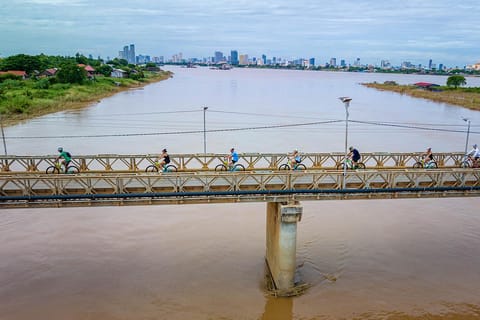
Phnom Penh greets you with its smells before you see a single sight. Charcoal smoke coils from street grills. Frangipani blooms overhead. The Mekong's slow brown arm wraps the east side, brackish and silt heavy. At Chaktomuk, the Tonle Sap meets the Mekong in one of the only places on earth where a river reverses direction twice a year.
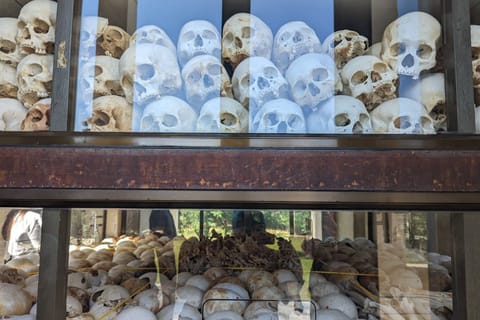
Fishermen cast nets at dawn within sight of the Royal Palace's gold leaf spires. Early light turns Sisowath Quay amber. The city owns its contradictions without apology. Psar Thmei's Art Deco dome, built by the French in 1937, stands a short tuk tuk ride from Tuol Sleng, the high school the Khmer Rouge turned into a prison.
Phnom Penh does not smooth the distance between them. You eat bai sach chrouk at a plastic sidewalk table. Pork slow cooked over coals tops broken rice. Pickled daikon and clear broth come on the side. Motos weave close enough to brush your shoulder. It costs next to nothing. The traffic terrifies newcomers for two days.
A river of scooters obeys no visible rules yet produces no visible casualties. After that you cross like everyone else. Walk slowly. Do not stop. Trust the current to bend around you. BKK1, south of Independence Monument, now hosts specialty coffee roasters and coworking spaces that could pass for Melbourne. Turn one corner and you're back among rice shop grandmothers and monks in saffron walking morning alms routes.
Phnom Penh is currently the most affordable capital in Southeast Asia that still feels like a real capital. The food alone justifies the flight.
Travel Tips
Transportation: Tuk tuks are the connective tissue of Phnom Penh. Three wheeled motorcycle rigs carry a covered passenger carriage bolted to the back. Download Grab before you land. It works for tuk tuks and motos alike. The fare locks in before you climb aboard, ending the negotiation that otherwise starts every ride. Solo motos cost less and move faster. They thread gaps a tuk tuk cannot fit. You need comfort with close range traffic and no seatbelt. Phnom Penh has no metro and no bus network worth relying on. For anything under two kilometers, walk. The city is flat as a table. Side streets off Sisowath Quay reward a slower pace.
Money: Cambodia runs on two currencies at once. Phnom Penh takes this further than anywhere else in the country. The US dollar is the working currency for anything above pocket change. Hotels, restaurants, and shops all price and accept it without blinking. Riel, the local currency, is the coins the dollar does not have. Change below a dollar comes back in riel. ATMs dispense dollars. You likely do not need to visit an exchange counter at all. The catch: torn or heavily worn dollar bills get refused everywhere, even by banks. Bring clean, recent issue notes from home if you can. Your wallet does double duty from the moment you land.
Cultural Respect: Cambodia's monarchy is constitutionally protected and personally revered. Any disrespect toward the king, even casual, can result in a prison sentence. This is not theoretical. At temples, cover your knees and shoulders. Remove shoes before entering any prayer hall. Never point your feet toward a Buddha image or a monk. Tuol Sleng and the Killing Fields at Choeung Ek deserve the same quiet you would give a war memorial. Audio guides are worth the cost. Photography is permitted but read the room before raising your phone. Phnom Penh is forgiving of most tourist missteps. But those three lines are firm. A basic sampeah, palms pressed together with a slight bow, opens doors that money will not.
Food Safety: Start your first morning with bai sach chrouk. Pork marinated in coconut milk and garlic grills over charcoal until the fat renders sweet and smoky. It arrives on broken rice with clear broth and pickled vegetables on the side. Carts along Monivong Boulevard serve it before six in the morning. This is the fastest way to understand what Khmer cooking does well: restrained heat, layered sweetness, and the fermented depth of prahok, the fish paste that anchors nearly everything savory in Cambodia. If prahok's funk stops you on the first bite, give it three meals. It earns its place. The ice in established restaurants and street stalls is factory made and safe. Stick to sealed water otherwise.
When to Visit
Phnom Penh's calendar cleaves into two halves: dry from November through April, wet from May through October. The question is not if you come. But how you want the city to greet you. November through February is prime time. Thermometers hover at 25 to 30 degrees Celsius (77 to 86 Fahrenheit), humidity drops to a level lungs can forgive, and skies stay postcard blue for days.
Bon Om Touk, the Water Festival, lands in November. Three days of longboat races on the Tonle Sap River haul more than a million Cambodians to the capital. Sisowath Quay turns into a human traffic jam. Fireworks crack overhead. Vendors sell grilled corn until 2 a.m. Hotel rates jump 30 to 50 percent during the festival and again at Christmas and New Year when tourists flood the riverside bars.
March and April hit like a furnace. Mercury slams to 38 to 40 degrees Celsius (100 to 104 Fahrenheit). The air stalls, thick as soup. Walking between noon and three feels like strolling inside a hair dryer. Asphalt radiates heat upward. Sun hammers down. Even tuk-tuk drivers sag. Khmer New Year in mid-April drains the city.
Locals bolt for the provinces. Restaurants shutter. Traffic evaporates. Phnom Penh becomes a quiet movie set. Prices bottom out. Handle heat well? You will own the town.
May through October brings the wet season. Afternoon storms arrive on schedule, pound tin roofs for an hour, then vanish. Streets steam. The air smells of wet earth and exhaust. Mornings stay clear and a few degrees cooler than the furnace months. Hotel prices fall 20 to 40 percent below peak. You will share Tuol Sleng, the Royal Palace, and the National Museum with almost no one.
Silence inside S-21 cuts deeper when your footsteps echo solo. September and October complicate the bargain. The Mekong swells. Low streets near the riverfront flood ankle-deep. Intersections become shallow pools. Motos roar through without slowing. Pchum Ben, the festival of the ancestors, lands in late September or October.
Every pagoda fills with incense, chanting, and sticky rice offerings before dawn. It is the closest you will get to the city's spiritual pulse without a personal invitation.
More Ways to Experience Phnompenh
Tours, day trips, and local experiences curated by on-the-ground operators.
Didn't see anything interesting yet?
Browse Viator's full catalog of tours, day trips, food experiences, and private guides in Phnompenh.
See All Phnompenh Tours on Viator