★★★
Budget
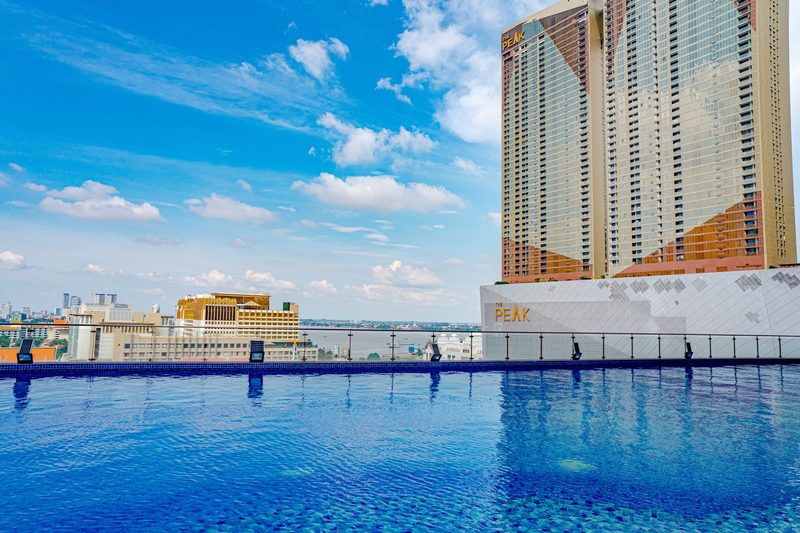
Phnom Penh Infinity Pool Down to $25/N - M Residence
From $43 / night
Check Prices on Trip.com →

July weather, activities, events & insider tips
Long-run averages for July
Weigh the advantages and considerations before booking
Top things to do during your visit
The Royal Palace compound is Phnom Penh's gravitational centre, and July is arguably the best month to experience it properly. With dry-season tour bus volumes absent, you can walk the courtyards at a pace that lets you notice things the crowds usually obscure: the floor of the Silver Pagoda, tiled with over 5,000 silver blocks that catch the light from the doorway in shifting patterns, or the faded Reamker murals running the length of the gallery wall, their pigments softened by decades of tropical air. Morning visits before 10 AM are coolest. The flagstones are still damp from overnight rain, and the gold spires of the Preah Thineang Dheva Vinnichay glow against overcast skies in a way the harsh dry-season sun never allows. July's softer light is better for photography here. Dress code is enforced: shoulders and knees covered, no exceptions, and the guards at the gate will turn you away without discussion. Cover up.
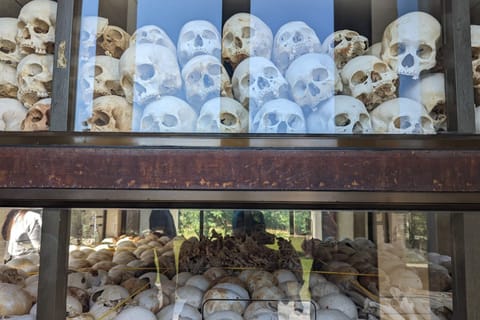
Phnom Penh's genocide memorial sites demand a full morning and a particular kind of attention. Tuol Sleng, the former high school turned S-21 detention centre, is a building where the silence has weight: the iron bed frames in the interrogation rooms, the thousands of black-and-white photographs lining the corridors, the courtyard where the frangipani trees have grown tall in the decades since. In July's low season, you may find yourself nearly alone in certain wings, which changes the experience profoundly. The drive to Choeung Ek, about 15 km (9.3 miles) southwest of the city, passes through wet-season rice paddies that are luminously green, an unsettling contrast with what you encounter at the memorial stupa. The audio guide at Choeung Ek is exceptionally well produced and worth every minute. Allow the full morning. Rushing these sites dishonours them.
The Tonle Sap and Mekong rivers meet directly in front of Phnom Penh's waterfront, and July reveals what that confluence means in practice. The Mekong swells with monsoon runoff from upstream, pushing hard enough that within weeks it will reverse the Tonle Sap's flow entirely. This is one of the only rivers on earth that changes direction seasonally. Sunset cruises from the Sisowath Quay area put you on the water as the sky turns copper and violet over the floodplain. The Royal Palace glows gold along the eastern bank. Fishing boats anchor in the shallows. The breeze on the river is the only reliable relief from July's humidity. The water itself carries a mineral, silty smell that is distinctly Mekong. Some operators run longer trips past floating villages and stilted houses along the banks. Daily life carries on at water level regardless of who watches from the deck.
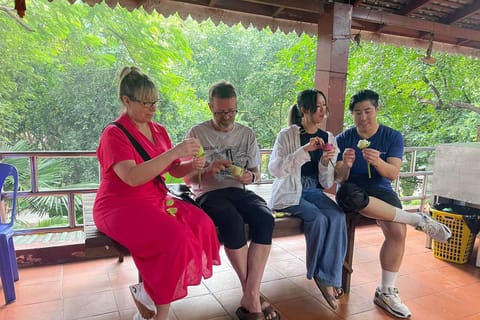
When July's afternoon rains trap you indoors, a cooking workshop turns a lost afternoon into your most useful souvenir. Phnom Penh's cooking classes typically start at a wet market. Phsar Kandal or the edges of the Russian Market work well. You walk with an instructor through stalls piled with lemongrass, galangal, kaffir lime leaves, and the fermented fish paste called prahok that forms the backbone of Khmer cuisine. The smell of prahok divides people. It is funky, salty, savoury. Nothing like the sanitised fish sauce you buy in bottles back home. You will likely learn fish amok. This is the banana-leaf-steamed curry made with slok ngor leaves and coconut cream that achieves a silky, custard-like texture when done right. You might also learn lok lak, the pepper-crusted beef with its lime-and-Kampot-pepper dipping sauce that makes you wonder why this dish is not famous worldwide. The wet season means the herbs are at their most fragrant and the market greens are at their peak.
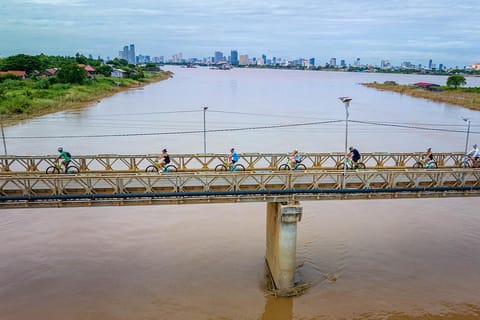
Koh Dach sits in the Mekong about 10 km (6.2 miles) northeast of central Phnom Penh. This flat island of palm trees, silk-weaving villages, and sandy riverbanks feels like it belongs to a different century. The short ferry crossing takes maybe fifteen minutes, with the brown water churning below the bow. It drops you into a landscape of stilted wooden houses and hand looms where families produce silk textiles using techniques passed through generations. In July, the island is lush and quiet. The weaving workshops are uncrowded. The riverside paths are shaded by rain-fed canopy. The women working the looms will show you the process if you ask. The rhythmic clack of the shuttle is a sound you will not hear anywhere else in the city. Leaving Phnom Penh for a rural island on a day when rain might come seems odd. The covered weaving sheds and sheltered village lanes mean a shower barely interrupts the visit. Cycling the island's flat paths, about 8 km (5 miles) of them, works well in the cooler morning hours.
Phnom Penh's indoor cultural circuit suits July's climate well. The National Museum of Cambodia, a terracotta-red building in traditional Khmer style set around a garden courtyard, holds the world's largest collection of Khmer sculpture. Sandstone pieces from Angkor proved too heavy for colonial-era looters. Bronze Vishnus have turned green with centuries of patina. Pre-Angkorian statuary predates the temples by hundreds of years. The courtyard smells of wet earth and lotus after a rain. The galleries stay naturally cool behind their thick walls. From there, the emerging contemporary art spaces along Street 240 and in the BKK1 neighbourhood offer a sharp pivot into modern Cambodia. Installations and photography grapple with memory, urbanisation, and identity in ways that complicate whatever narrative you arrived with. The contrast between a ninth-century Shiva and a twenty-first-century Cambodian photographer's work on the same afternoon gives you a through-line that no single museum visit can.
Hand-picked hotels across price tiers for July travellers.
Bookmark this page — your progress is saved between visits
Climate-specific gear, brand recommendations, and what to leave at home.
View Phnompenh Packing List →Insider knowledge and common pitfalls to avoid
Now that you've got the research covered, here's where to go next.
Top-rated things to do in Phnompenh this July
Didn't see anything interesting yet?
Browse Viator's full catalog of tours, day trips, food experiences, and private guides in Phnompenh.
See All Phnompenh Tours on Viator