
★★★
Budget
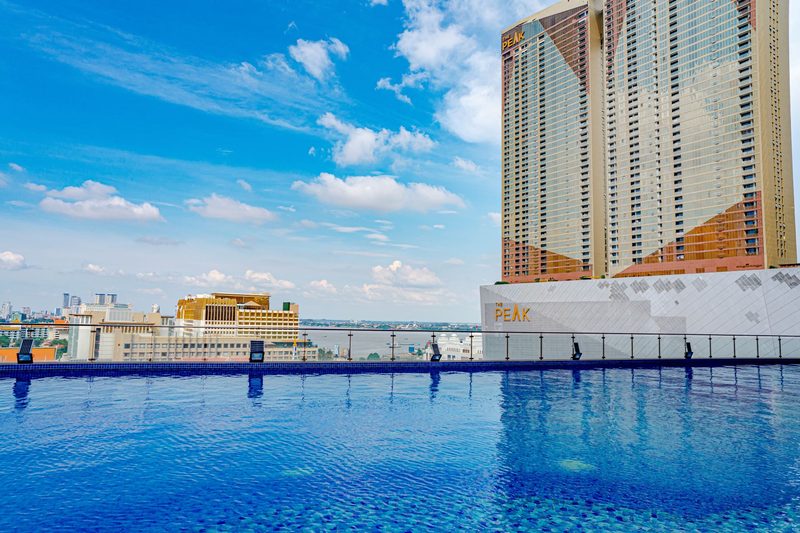
Phnom Penh Infinity Pool Down to $25/N - M Residence
From $43 / night
Check Prices on Trip.com →

March weather, activities, events & insider tips
Long-run averages for March
Weigh the advantages and considerations before booking
Top things to do during your visit
March lands in the driest stretch of Phnom Penh's calendar. Average highs hit 94°F (34°C). Barely an inch and a half of rain falls across the entire month. The air sits heavy and warm from early morning. By midday the concrete along Sisowath Quay radiates heat you can feel through the soles of your shoes. This is the tail end of the cool-dry season before April's monsoon overture. The Tonle Sap and Mekong rivers run low and slow. Muddy banks emerge where fishermen mend nets in the shade of corrugated tin shelters. Compared to the drenching months of September and October, when Phnom Penh receives over ten inches of rainfall, March feels almost arid. Mornings before seven offer a window of tolerable warmth. Monks in saffron robes collect alms along the riverside. The smell of charcoal-grilled pork skewers drifts from street vendors already at work. The pace of Phnom Penh in March has a particular cadence. Without the chaos of monsoon flooding or the festive crush of Khmer New Year in April, the city operates at a steady hum. Tuk-tuk drivers idle in the shade of tamarind trees along Norodom Boulevard. The clatter of their engines goes quiet. Night markets along Street 178 stay open late. Their stall lights buzz against the dark sky. The tang of green mango salad and the sweetness of palm sugar crepes fill the humid evening air. For travelers researching Phnom Penh weather in March, the short answer is this: pack light linen, carry water constantly, and plan outdoor excursions for early morning or late afternoon when the sun drops low enough to turn the Mekong copper. Hotels across the city range from guesthouses near the Central Market to riverfront properties with rooftop pools. March occupancy sits between the peak of January and the lull of the wet season. It is a reasonable window to find a room without competing against holiday crowds. It is the quality of the light and the stillness of the water. The Mekong at low stage reflects the sky in long, unbroken planes of silver and pale blue. Dust from unpaved side streets in Russei Keo district catches the late-afternoon sun and turns the air golden. Phnom Penh in this season rewards the patient traveler. Rise early. Rest through the hottest hours. Emerge again when the city exhales into evening.
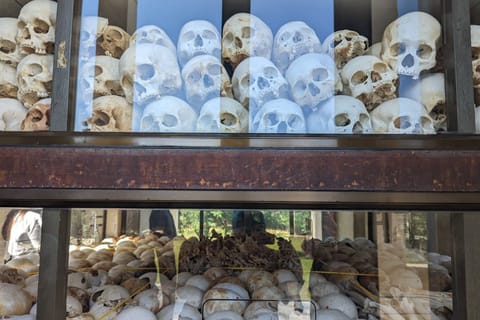
The Killing Fields at Choeung Ek and the Tuol Sleng Genocide Museum (the former S-21 prison) are two sites no visitor to Phnom Penh can responsibly skip. At Choeung Ek, you walk a dirt path past shallow depressions in the earth where mass graves were exhumed. The silence breaks only when recorded testimonies pipe through your audio guide headset. Scraps of fabric still surface from the soil after heavy rains. The memorial stupa at the center holds thousands of skulls arranged behind glass. Their presence is both clinical and staggering. Tuol Sleng, a former high school converted into an interrogation center, retains its rusted bed frames, shackles, and the grid of black-and-white mugshots that line every corridor. Each face stares directly into the lens.
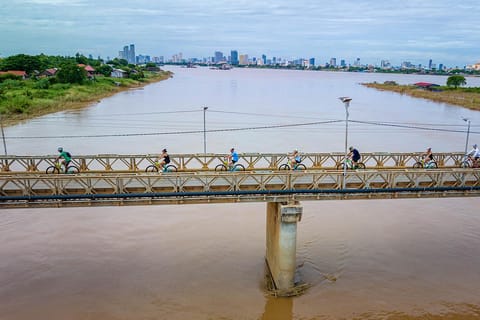
Silk Island, known locally as Koh Dach, sits a short ferry ride across the Mekong from Phnom Penh's northern outskirts. This cycling tour takes you along raised dirt paths between rice paddies. In March they lie fallow and dry, their cracked surfaces stretching to the tree line. The island's silk-weaving families work under their stilted wooden houses. The rhythmic clack of floor looms carries from the path. You can watch raw threads being drawn from boiled cocoons in shallow metal basins. The smell of hot water and natural dye is sharp in the air. Stopping at a weaving household, you feel the density of finished silk between your fingers. The texture is surprisingly cool against March's heat. Whether you choose a bicycle, e-bike, or tuk-tuk determines the pace but not the route. It winds past village temples, cashew orchards, and stretches of sandy riverbank.

In a city where physical labor, heat, and walking on uneven pavement take a toll, a foot reflexology session operates as both indulgence and genuine recovery. Phnom Penh's reflexology studios draw from both Khmer traditional massage and Chinese pressure-point technique. The better ones begin by soaking your feet in a warm herbal bath fragrant with lemongrass and kaffir lime leaves. The pressure is firm and precise. It works along the arch and heel with a focused intensity that borders on uncomfortable before releasing into a deep, radiating warmth. You hear the low hum of ceiling fans. You feel the cool tile floor beneath the treatment chair. For an hour the diesel noise of the street outside fades to nothing.

The overland route from Phnom Penh to Siem Reap covers roughly 315 kilometers of National Route 6. A private transfer by minivan or car eliminates the compressed seating and unscheduled stops of the public bus. The drive passes through Kompong Cham province. Sugar palm trees line the road in staggering numbers, their silhouettes sharp against the flat horizon. In March, the landscape along this corridor is dry and brown. The rice fields were harvested months earlier. Small roadside stalls sell dried fish and palm sugar wrapped in banana leaves. The caramel scent is noticeable even through the vehicle's air conditioning. The road surface has improved considerably in recent years. The journey typically takes five to six hours with a rest stop near Skun. Fried tarantulas are sold from metal trays by vendors who will let you inspect the crispy, salt-seasoned specimens before committing.

This day trip runs the full Phnom Penh to Siem Reap corridor and back. It covers Angkor Wat, the Bayon, and Ta Prohm in a single long push. It is ambitious and exhausting. For travelers whose itinerary pins them to Phnom Penh without an overnight in Siem Reap, it delivers the three most significant Angkorian temples in one sweep. At Angkor Wat, the sandstone towers catch the March morning light in shades of warm amber and pale gold. The bas-relief galleries along the outer wall depict the Churning of the Sea of Milk. You can trace the sculptural precision with your fingertips along the cool stone. The Bayon's two hundred carved faces stare outward from every angle. Their half-smiles shift expression depending on the light. At Ta Prohm, silk-cotton trees grip the gallery walls with roots as thick as a person's torso. The crack and creak of slow-motion arboreal destruction is audible in the quiet courtyards. Lunch is included, typically a Khmer set meal at a restaurant near the temple complex.
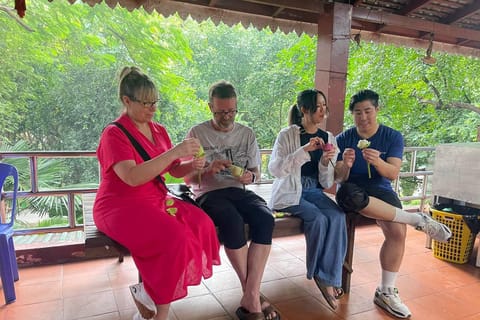
This full-day guided tour links the Royal Palace and Silver Pagoda with Tuol Sleng and the Killing Fields. It covers the full emotional and historical arc of Phnom Penh in a single itinerary. At the Royal Palace, the Throne Hall's gilded spire rises above manicured grounds. Frangipani trees release a thick, sweet fragrance into the warm air. The Silver Pagoda floor, laid with over five thousand silver tiles, gleams underfoot in the dim interior light. Moving from the ornate court architecture to the bare concrete cells of S-21 produces a tonal shift that no self-guided day replicates as cleanly. The guide contextualizes the Khmer Rouge's dismantling of exactly the institutions you saw that morning. The tour also threads in Wat Phnom, the small hilltop temple that gives Phnom Penh its name. Incense smoke rises through the trees. Resident monkeys snatch offerings from the shrine tables.
Hand-picked hotels across price tiers for March travellers.
Dates that affect opening hours, transport and crowds
Known in English as International Women's Day. Observed nationwide as a public holiday.
Known in English as International Women's Day. Observed nationwide as a public holiday.
Bookmark this page — your progress is saved between visits
Climate-specific gear, brand recommendations, and what to leave at home.
View Phnompenh Packing List →Insider knowledge and common pitfalls to avoid
Now that you've got the research covered, here's where to go next.
Didn't see anything interesting yet?
Browse Viator's full catalog of tours, day trips, food experiences, and private guides in Phnompenh.
See All Phnompenh Tours on Viator