★★★
Budget
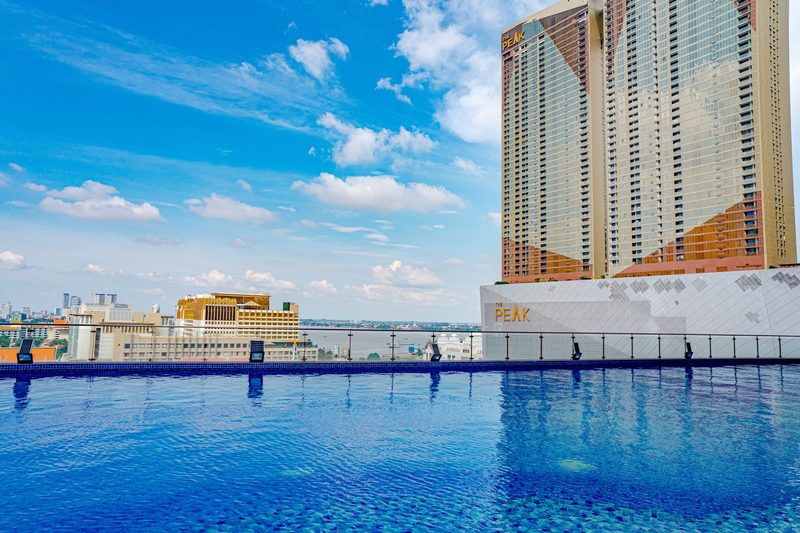
Phnom Penh Infinity Pool Down to $25/N - M Residence
From $43 / night
Check Prices on Trip.com →

August weather, activities, events & insider tips
Long-run averages for August
Weigh the advantages and considerations before booking
Top things to do during your visit
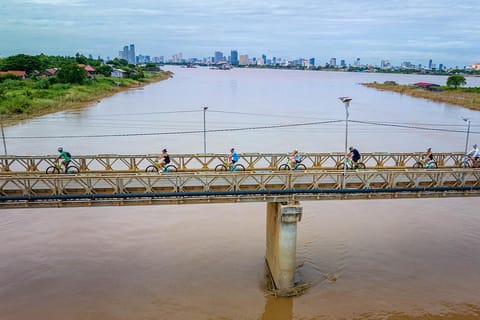
August puts you on the Mekong at its most powerful. The water level at Chaktomuk, where the Mekong, Tonle Sap, and Bassac rivers converge just south of the Royal Palace, runs near its annual peak. The current moves with a visible urgency that dry-season visitors never see. Sunset departures from the Sisowath Quay piers head south past the Cambodiana district and loop around Koh Pich. The monsoon cloud cover cracks open in pinks and copper that only August's theatrical skies produce. The breeze off the swollen river drops the perceived temperature by several degrees. After a humid day in the city, this feels like a physical reset. The combination of empty decks, dramatic water, and that post-storm light makes this the single best activity for an August evening in Phnom Penh.
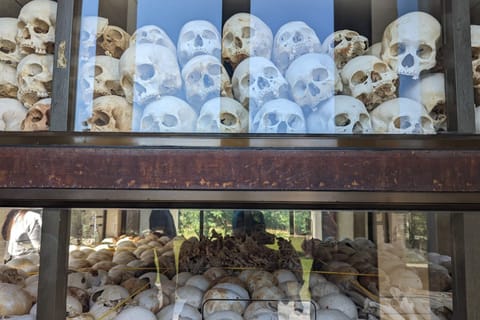
August's thin crowds make Phnom Penh's most confronting historical sites feel the way they should. They are quiet, heavy, and uncomfortably personal. Tuol Sleng, the former high school converted into a Khmer Rouge interrogation center, is a series of bare rooms where the humid August air carries a faint institutional dampness. This compounds the visceral weight of the iron bed frames and barbed-wire balconies. The Killing Fields at Choeung Ek sit about 15 km (9.3 miles) south of the city center. In the wet season the memorial grounds are green and almost gentle-looking, which makes the glass-walled stupa filled with skulls even more jarring. Visit in the morning before the rain. Give yourself time. The audio guide is among the most carefully produced at any memorial worldwide. These two sites together demand a full morning and an emotional readiness that no amount of reading fully prepares you for.
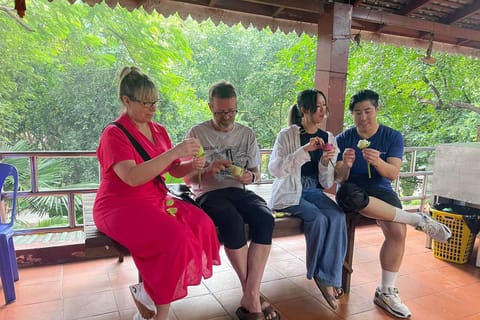
The ideal rainy-afternoon activity that never feels like a consolation prize. The best cooking classes in Phnom Penh begin with a morning walk through one of the city's wet markets. Try Phsar Kandal or Phsar Chas, where vendors stack bundles of morning glory, stalks of lemongrass, knobs of galangal, and jars of prahok. This fermented fish paste has a pungent funk that is the backbone of Khmer cooking. August brings peak-season water spinach, lotus stems, and river fish to these stalls in a variety the dry months cannot match. You will pound a kroeung, the aromatic paste of lemongrass, turmeric, kaffir lime leaf, and shallot that underpins nearly every Khmer curry. You will steam a fish amok in banana leaf until the kitchen fills with coconut and galangal steam. Three to four hours of work, then you eat everything you made while the afternoon rain drums on the roof overhead.
Mornings in August Phnom Penh are your window. Use them well. The air stays comparatively cool, comparatively being generous at around 28°C (82°F) by 8 AM. The rain has not yet gathered. Start at the Royal Palace compound. The Throne Hall's tiered Khmer roof and the Silver Pagoda's floor of over five thousand silver tiles catch the soft, overcast light. This beats the harsh dry-season glare for photography. The gardens drip from overnight rain. Frangipani smells thick and sweet along the walkways. Walk north along Sothearos Boulevard past the Independence Monument to Wat Phnom. This small hilltop temple gave the city its name. The climb is barely 27 m (89 ft). The canopy of tropical trees above the naga staircase grows so dense in August that the light filtering through turns green and almost subaquatic. You will likely have the upper terrace to yourself. Plan to be done by noon. The sky will tell you when your outdoor time is up.
Koh Dach sits in the Mekong about 10 km (6.2 miles) north of central Phnom Penh. Getting there in August is half the experience. The ferry crossing takes roughly fifteen minutes. With the river swollen and fast-moving, the current pushes the boat sideways while the brown water laps near the gunwales. This crossing feels earned rather than routine. On the island, silk weaving houses are open-sided workshops shaded by corrugated roofs. Women work wooden pedal looms in a rhythmic clack-clack that becomes ambient sound within minutes. The silk itself, ikat-dyed sampot patterns in deep indigos and magentas, is hand-produced on these looms. This is not the factory-printed version sold in the tourist markets back in the city. August's negligible tourist traffic means the weavers are more likely to pause and walk you through the dyeing process. This involves tying off silk threads with strips of palm leaf before immersion in natural pigments. Village roads get muddy. Wear shoes you can sacrifice.
Hand-picked hotels across price tiers for August travellers.
Bookmark this page — your progress is saved between visits
Climate-specific gear, brand recommendations, and what to leave at home.
View Phnompenh Packing List →Insider knowledge and common pitfalls to avoid
Now that you've got the research covered, here's where to go next.
Top-rated things to do in Phnompenh this August
Didn't see anything interesting yet?
Browse Viator's full catalog of tours, day trips, food experiences, and private guides in Phnompenh.
See All Phnompenh Tours on Viator